
 Come as a guest
The short answer
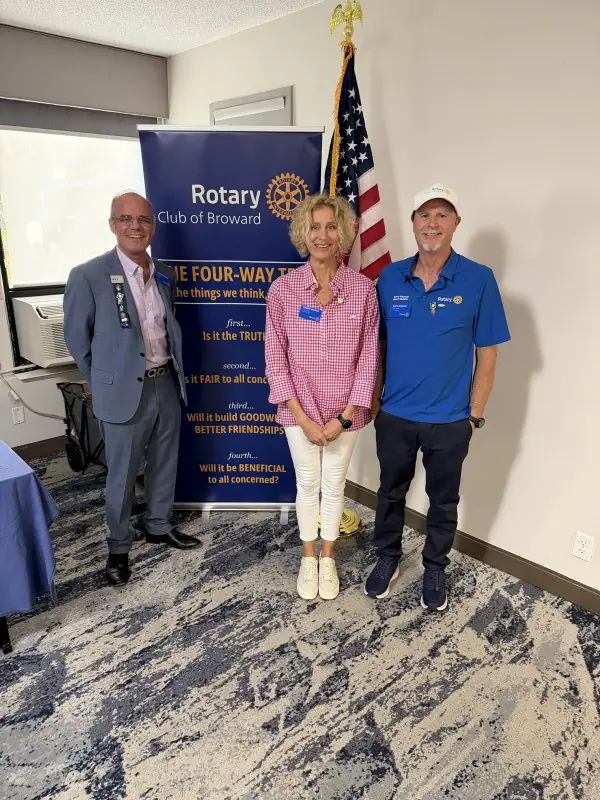
The Four-Way Test asks four questions of the things we think, say or do: Is it the truth? Is it fair to all concerned? Will it build goodwill and better friendships? Will it be beneficial to all concerned? Herbert J. Taylor wrote it in 1932 while rescuing the nearly bankrupt Club Aluminum Company in Chicago. Rotary adopted it in 1943 and it hangs on the wall of nearly every Rotary club on earth.
Key takeaways
- Four questions, in order. The first one, truth, is the gate for the other three.
- Written by a businessman to fix a business. No committee involved.
- It applies to what you think and say, not only to what you do.
- Rotarians recite it at meetings and use it in actual decisions.
- It is simple enough for a twelve-year-old and hard enough for a CEO.
The text
Of the things we think, say or do:
- Is it the truth?
- Is it fair to all concerned?
- Will it build goodwill and better friendships?
- Will it be beneficial to all concerned?
Where it came from
In 1932 Herbert Taylor took over Club Aluminum, a Chicago cookware company deep in debt during the Depression. He decided the company's only way out was a reputation for honesty that competitors could not match, so he wrote a 24-word code for employees to check their decisions against. Taylor later said he tested it on himself for sixty days first. The company recovered. Taylor became president of Rotary International in 1954 and gave Rotary the rights to the test.
Easier than reading about it: come to a meeting. Come as a guest
 Come as a guest
How Rotarians use it
At the simplest level, clubs recite it. Beyond that, members use it as a sanity check in the moments that matter: the proposal you are about to send, the review you are about to write, the deal that only works if someone else loses. The questions are in that order for a reason. Something can be fair and beneficial and still not be true, which is why truth comes first.
For a club whose members are building careers in a county full of fast deals, the test is a competitive advantage. People do business with people who pass it.
Sources
- Rotary International: Guiding principles www.rotary.org/en/about-rotary
- Wikipedia: Four-Way Test en.wikipedia.org/wiki/Four-Way_Test
- Rotary International: History www.rotary.org/en/about-rotary/history